
You’re an Athlete
So Maybe Act Like It?

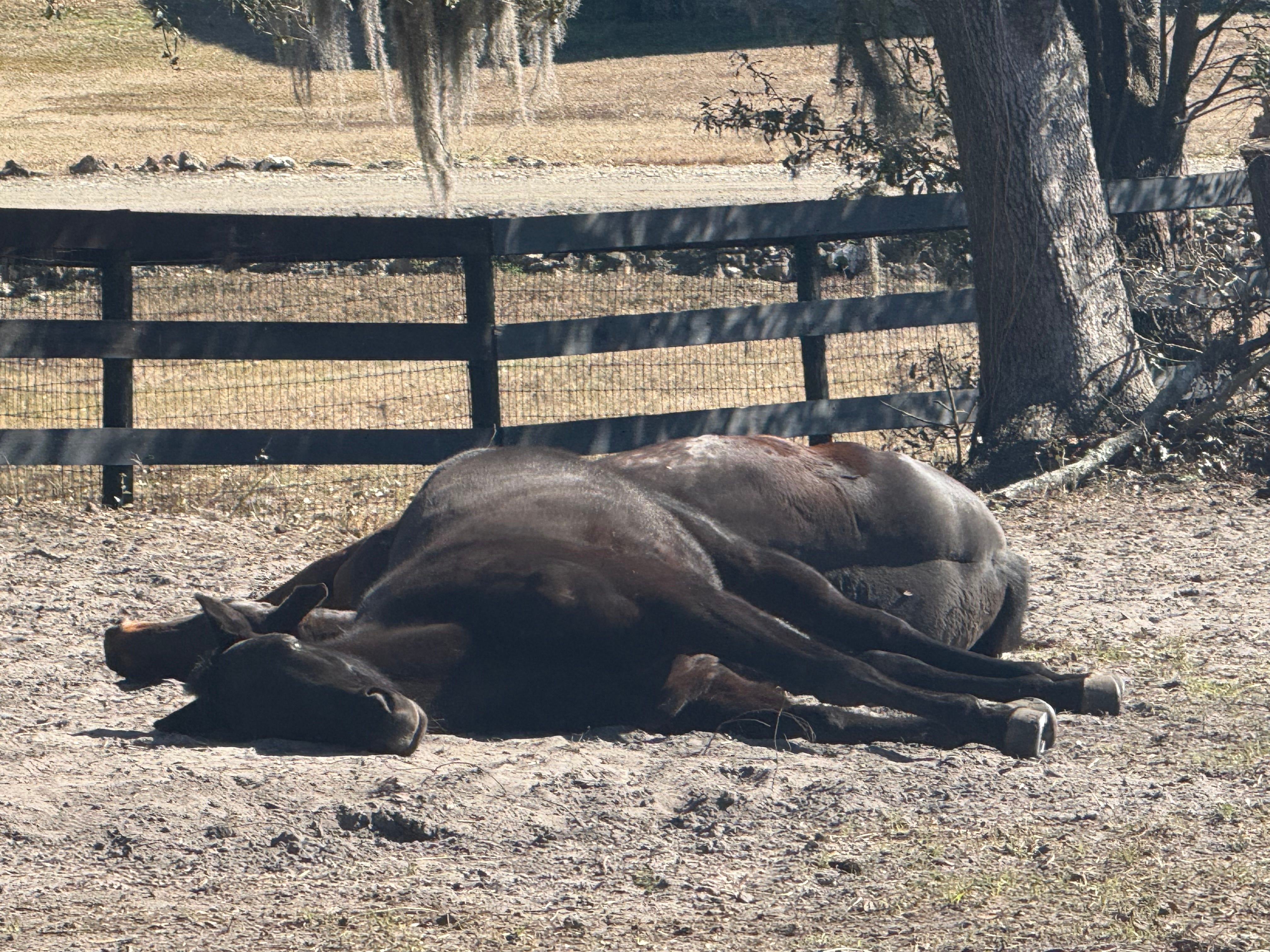
I’m trying this idea on for size.
A week ago Monday, I had to bail off my horse Nes, a tall, athletic off-track Thoroughbred, or retired racehorse. I did not fall: there is a difference and it is not pedantic. Bailing is deciding, the longer you stay on a horse, the worse it’s gonna get so depart while you still have some body control. Falling is just that. You’re out of options, most importantly your ability to manage your body’s response to your horse’s power.
This doesn’t mean bailing always works. In my case it did.
99% of the time, Nes is the world’s most trustworthy riding pony. 1% of the time, he is… a horse. In his case, about 1300 pounds of prey animal capable of earthbound flight. Most of the time, he’s simply noticing the white bank he’s passed… at least a dozen times before, but this time there’s a different shadow? A bird on it? New leaves? Because behind him are about 45 million years of ancestors who did not get eaten at the waterhole long enough to reproduce. Compared to them, we hairless pink monkeys are toddlers.
Also, he is an athlete who can temporarily suspend the law of gravity, and he enjoys it. I call it gallivanting, and many of his spooks are mini-gallivants. We did have one serious spook back in the fall when we were hacking along a hedge row and disembodied horse heads appeared over it at a high rate of speed. My horse and the horse of the friend I was riding with, got excited. Then the other horses got excited. And Nes and I went from a walk to a canter, did some canter pirouettes, then back to a walk. But I never felt like I was losing control or was gonna lose my seat.
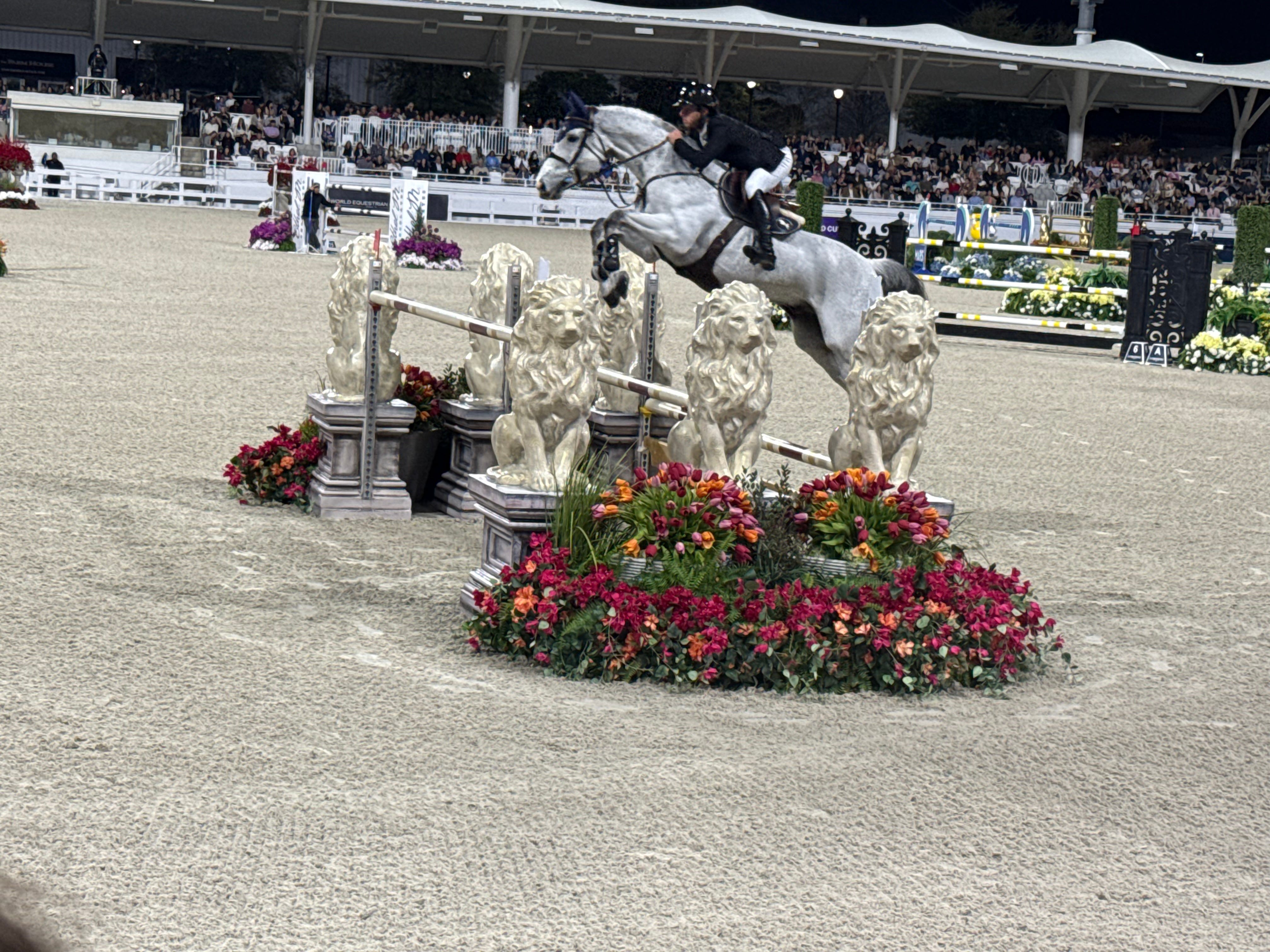
Monday was different. I normally wear a body protector when I ride, and an air vest was on my shopping list. But because it’s warming up, I left my protector in the tack room. On the way down to the arena, I told the barn owner, I hoped I didn’t regret riding without it.
My brain was telling me, he’s gonna be a bit amped because he sees those poor horses from the hunter barn running around like idiots because they only get an hour of turnout a day. (And then their people wonder why they have issues. )Yeah. Get off your horse, get your body protector, and lunge your horse, not to tire him out but to let him gallivant a bit and get it out of his system. But no.
We had a great lesson. The first 43 minutes were fantastic, and now we were coming into our last canter of the day, and Nes was indeed a bit amped because he’s a retired racehorse feeling good. He got strong with me and started falling into the right, and I tried to push him back out so he wouldn’t trip over his feet, which is a possibility when you’re cantering on a circle suddenly getting smaller. I lost my balance and then suddenly I had no control at all, because unbeknownst to me at the time, he needed his teeth floated, meaning hooks, points, and edges filed down: a horse’s teeth grow continuously, and need this about once a year. Scared and in pain, he started cantering sideways, surely because I had shortened my reins unevenly, and I decided, if we left the unfenced arena, I needed Plan B.
We left the arena at speed.
Realizing I was only making the situation worse, I considered leaning forward to hug his neck and slide off. Nope, would put my own neck at risk. So I dropped my stirrups and reins (you do not want to get hung up in your tack, I don’t care what they say about safety stirrups, which I do use), and leaned off to his left, intending to spread the impact over as much of my body as possible.
Which I did. I hit knees first, but even my bad knee was untroubled by the impact. Then thighs, torso, arms, one witness said I landed as if I was imitating Superman flying. Brim of my helmet took the impact, probably saving me a broken nose.
Yes, I went out and bought an air vest because it protects your cervical spine the way a body protector doesn’t. Also a new helmet, because my old one was now compromised. That brim isn’t just a sunshield. It helps protect your face and my brim was broken.
No concussion, no lost memory, except for the impact itself, perhaps because my brain was so busy arranging my body, extraneous stuff like seeing and feeling for a second just didn’t matter. Nothing broken, no cracked ribs. Nothing except for some ants deciding my hands were tasty, and some strained intercostal muscles. Not pulled, not ripped, simply sore.
I got my breath and calmed down, then got back on Nes and we just walked. Later, when I untacked him, Nes, who is not cuddly, cuddled me, wrapping his neck around me and tucking me into his flank. If I had frightened and hurt him, it began with him accidentally frightening me and ended with me probably hurting quite a bit more than he had. And I know from past experience, he doesn’t like it when his exuberance frightens me: he wants me to have fun with him. We are friends of very different species, instincts, and reflexes, but we share a certain common morality. So we just fussed over each other a bit while I rubbed out his sweat marks and gave him a cookie before turning him out with his friend Tim.
The next morning, I was sore enough, I did not want to get up and row. And then I thought, Erin, you are preparing to ride across country on a bike, and there will be days when you really don’t want to. You’re an athlete, act like it.
So I got up and rowed 3 miles. Ever since, when I find myself not wanting to take the next step towards a goal, or wanting to do something I know will get in the way, I have heard that voice in my head saying You’re an athlete, act like it.
It is not how I have ever thought about myself, so I am still trying the idea on for size. Athletic, yes. But an athlete? No. And yet, I have been thinking, my athleticism has seen me though other falls that could and should have been so much worse with only superficial bruising. (Face first down 9 stairs, for example: one bruise, one minor abrasion.) Of course, I have been lucky. But the foundation of that luck is neurological reflexes and muscular mass and strength developed by athletic activity of many sorts: walking in a weighted vest; hiking, including under light load; riding horses; cycling; rowing; playing with weights; body weight exercises including a fair few pushups. The constant flow of oxygenated blood to the brain produced by exercise also helps.
I am not suggesting athleticism will save all older women from all physical catastrophes, only that it may help reduce the damage. We cannot, after all, repeal gravity and even horses can suspend it only momentarily. I am suggesting, we women can change who we are and how we think of ourselves, to become more than we have ever been told we are and are capable of, even at this point in time when our neighbors and our government are doing their best to tell us we are small and weak, should be small and weak, and are doing their best to ensure we become smaller and weaker than we already are.
What a riveting adventure! Great point about health and exercise for women!! The more I exercise, the more powerful I feel...even if it's just for a few moments. :)